
the science of awe
Awe Is a real Need
Clinically Supported. Developmentally Necessary. Practically Accessible.
Awe isn’t a luxury emotion.
It isn’t a trend.
It isn’t a vague spiritual idea.
Modern psychology and neuroscience increasingly point to awe as a core developmental input that supports emotional regulation, learning, social connection, and healthy identity formation in children.
At Global Galactics, we build awe intentionally—because children need it.

Clinically Backed by Research
Over the past two decades, researchers—led in large part by psychologists at the Greater Good Science Center at UC Berkeley—have identified awe as a distinct emotional state with measurable biological and psychological effects.
Peer-reviewed research shows that awe:
Activates the parasympathetic nervous system (the body’s calming system)
(Shiota et al., 2011 – Emotion)Is associated with lower levels of chronic inflammation (IL-6), a biological marker linked to stress-related illness
(Stellar et al., 2015 – Emotion)Increases well-being, life satisfaction, and positive mood
(Rudd, Vohs & Aaker, 2012 – Psychological Science)Produces a “small self” effect—healthy humility that reduces ego-focus and increases perspective
(Bai et al., 2017 – Journal of Personality & Social Psychology)Increases kindness, generosity, and helping behavior
(Piff et al., 2015 – Journal of Personality & Social Psychology)
These are not philosophical ideas.
They are measurable outcomes observed in controlled laboratory and field studies.
Awe functions as a regulatory emotion—helping organize both brain and body.

Awe Supports Learning at a Brain Level
Researchers describe awe as a “knowledge emotion”—an emotional state that prepares the brain for learning.
Studies show awe:
Increases curiosity
Increases openness to new information
Encourages flexible thinking
Supports updating mental models (how we understand the world)
In other words, awe makes the brain more receptive.
(Valdesolo, Shtulman & Baron, 2017 – Emotion Review)
(Gottlieb, Keltner & Lombrozo, 2018 – Cognitive Science)
Awe doesn’t push information into children.
It pulls curiosity out of them.

Awe Is Necessary for Healthy Development
Children are biologically wired to experience awe.
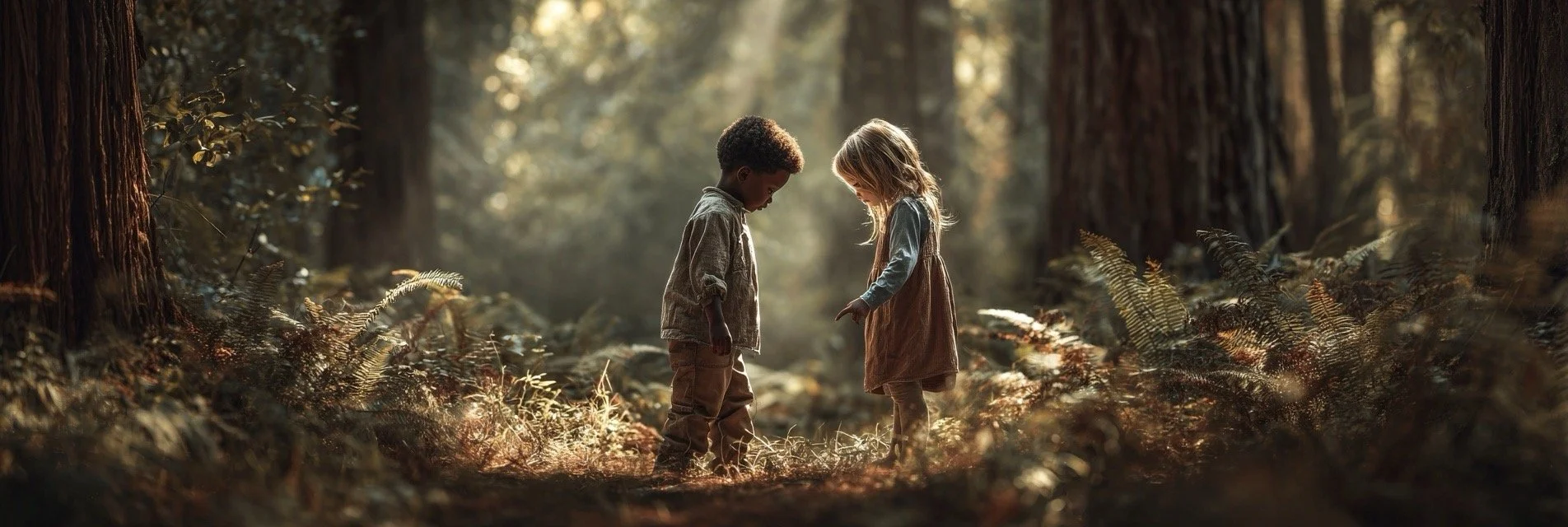
Early childhood naturally contains frequent awe experiences—discovering bugs, staring at clouds, listening to stories, watching animals, noticing patterns, asking “why.”
As children grow older, research suggests awe experiences often decline due to:
Increased screen saturation
Faster pacing of life
Performance pressure
Reduced unstructured exploration
When awe decreases:
Curiosity drops
Stress increases
Learning becomes more transactional
Emotional regulation becomes harder
When awe is protected:
Curiosity stays alive
Emotional resilience increases
Learning remains joyful
Social-emotional growth strengthens
Awe acts as a protective developmental factor.

Awe Is Practical, Not Abstract
Awe does not require meditation retreats, special equipment, or advanced training.
Clinical research shows awe is commonly triggered by:
Nature and the cosmos
Music and art
Acts of moral beauty (kindness, courage, generosity)
Big ideas and discoveries
These are everyday experiences.
Awe is not something children must intellectually understand.
It’s something they feel.